
DEBUNKING BITCOIN'S
MISCONCEPTIONS
DEBUNKING BITCOIN'S
MISCONCEPTIONS
Think Bitcoin is just for criminals or bad for the planet? Think again. This resource tackles the most common misconceptions with facts, data, and clear explanations—so you can separate fear from truth.

"Bitcoin isn’t backed by anything? It’s backed by math, code, and the energy securing the most powerful monetary network on Earth."
– Michael Saylor
"Bitcoin isn’t backed by anything? It’s backed by math, code, and the energy securing the most powerful monetary network on Earth."
– Michael Saylor
Featured

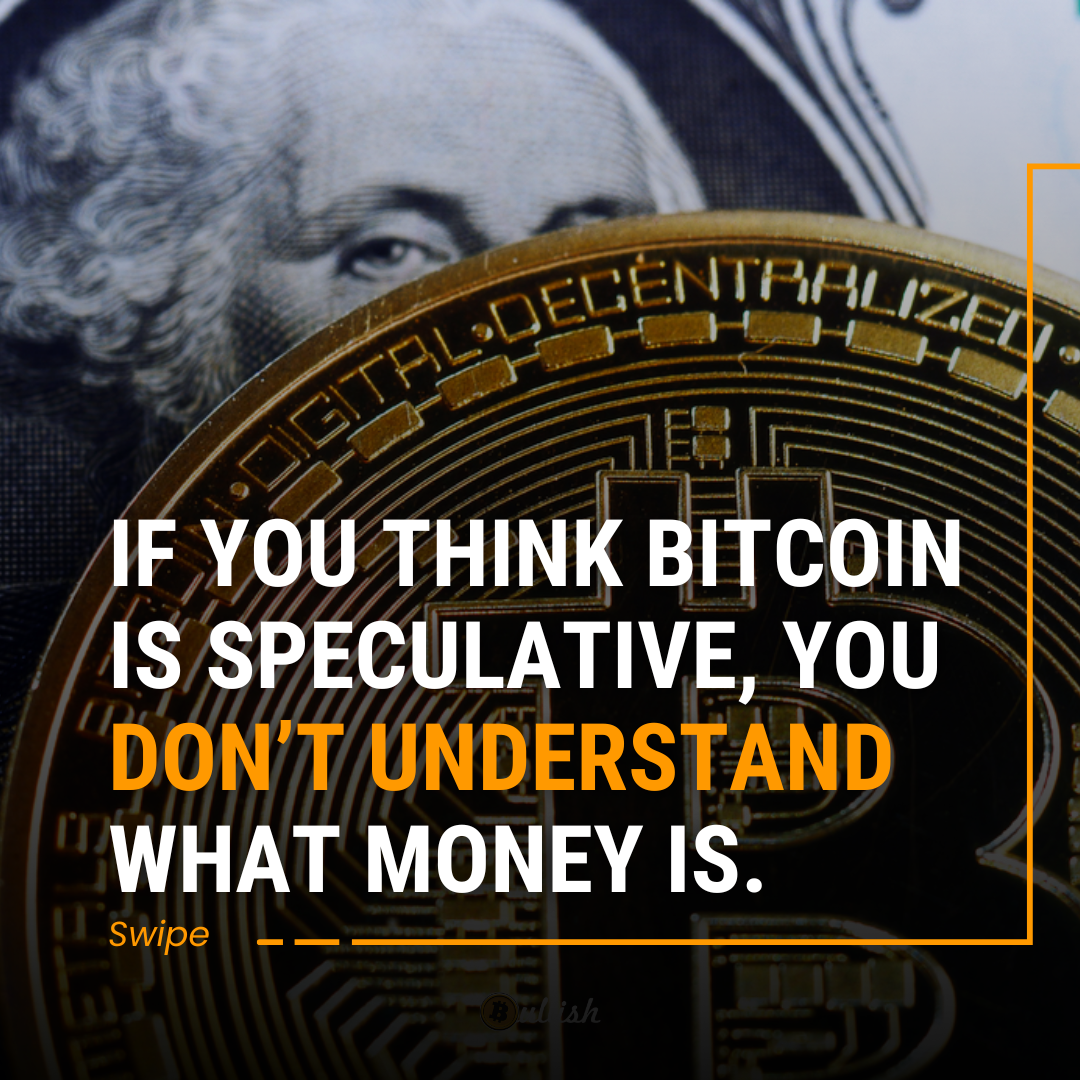

The Tax Illusion: How Governments Are Funded and Why It Changes Everything
Most people grow up with a simple story about how governments work. Citizens pay taxes, the government uses that money to fund roads, schools, defense, and social programs, and budgets are constrained by what the public can afford. It sounds logical. It feels fair. And it is almost entirely false.
In modern monetary systems, taxes are not the primary source of government funding. Governments fund themselves by issuing currency. Taxes play a different role, one that is far less intuitive and far more consequential. Understanding this distinction reshapes how you see inflation, debt, savings, and why working harder no longer seems to get people ahead.
This is not a conspiracy theory. It is the mechanical reality of fiat money systems.
Where Government Money Actually Comes From
In countries with sovereign currencies, governments spend money by creating it. When a government authorizes spending, new currency units are issued through coordination between the treasury and the central bank. Taxes are collected afterward, not to fund spending, but to partially remove money from circulation.
This is easiest to see during moments of crisis. During wars, financial collapses, or pandemics, governments do not wait to collect taxes before spending. They issue currency first. The spending happens immediately. The accounting follows later.
If taxes truly funded government spending, large emergency programs would be impossible without prior tax increases. Yet history shows the opposite. Spending expands rapidly, and taxes change slowly, if at all.
Why Taxes Still Exist
If governments can issue currency at will, a reasonable question arises. Why tax people at all?
The answer is uncomfortable but revealing.
Taxes exist to create demand for the currency, to manage inflation, and to preserve the illusion of fiscal responsibility.
By requiring taxes to be paid in the national currency, governments ensure that citizens must obtain and use that currency. This gives money its baseline demand. Taxes also remove some money from circulation, which can reduce inflationary pressure when done effectively.
But the most important function of taxes is psychological. They reinforce the belief that government spending is constrained by public contribution. This belief keeps trust in the system intact.
If citizens broadly understood that money creation, not taxation, funds the state, confidence in fiat currency would weaken. Once trust breaks, the system becomes unstable.
Inflation as the Invisible Tax
When new money is created, it does not distribute evenly. It enters the economy through specific channels, usually government spending, financial institutions, and asset markets. Those closest to the source benefit first. Prices adjust later.
This process is known as the Cantillon Effect. It explains why asset prices often rise before wages and why cost of living increases hit savers and workers hardest.
Inflation is not simply rising prices. It is a redistribution of purchasing power. Every new unit of currency dilutes the value of existing units. Your savings buy less. Your labor is worth less. And this happens without a vote, a bill, or a clear line item on a pay stub.
Unlike income taxes, inflation does not scale transparently. It quietly erodes wealth over time. For people living paycheck to paycheck or holding cash savings, the damage is severe.

Why Government Debt Rarely Gets Paid Back
Another common belief is that government debt must eventually be repaid like household debt. In fiat systems, this is largely untrue.
Governments roll debt forward indefinitely. Old debt is refinanced with new debt. Central banks purchase government bonds with newly created money, effectively monetizing the debt.
This system works as long as confidence holds. As long as people believe the currency will retain value, debt can grow far beyond what would be acceptable in a household or business.
The danger is not default. The danger is debasement.
History shows that when debt becomes politically impossible to service honestly, governments choose inflation. It is quieter. It is easier to blame. And it avoids immediate backlash.
The Role of Central Banks
Central banks are often described as independent institutions tasked with maintaining price stability and employment. In practice, they act as the monetary engine of the state.
By setting interest rates, purchasing assets, and expanding balance sheets, central banks determine how much money exists and where it flows. Their decisions shape asset bubbles, wage growth, housing affordability, and long term purchasing power.
While central banks do not directly set tax policy, they enable governments to spend far beyond tax revenue. This separation allows politicians to promise benefits without visibly raising taxes, shifting the cost into the future through inflation.

Why This System Persists
Fiat money systems persist because they are flexible, politically convenient, and difficult to understand.
They allow governments to respond quickly to crises. They smooth short term economic shocks. They enable massive public projects and social programs without immediate tax increases.
But this flexibility comes at a cost. Over time, discipline erodes. Incentives break. Currency becomes a political tool rather than a neutral measure of value.
For the average person, the result is a constant uphill battle. Wages struggle to keep pace with costs. Savings lose meaning. Long term planning becomes harder. People are pushed into riskier investments just to preserve purchasing power.
Why Sound Money Changes the Equation
Sound money introduces constraints. It limits arbitrary expansion. It forces tradeoffs to be made transparently.
When money cannot be created at will, spending must be justified. Debt carries real consequences. Savings regain meaning. Time horizons lengthen.
This is why systems with fixed or predictable monetary supply behave differently. They reward patience. They punish waste. They align incentives across generations rather than shifting burdens forward.
Bitcoin represents the first globally verifiable form of digital sound money. Its supply is fixed. Its issuance is transparent. No authority can alter its monetary policy.
This does not make it perfect. But it makes it fundamentally different.
Seeing the System Clearly
The real problem is not high taxes alone. It is a system where money creation replaces accountability, where inflation silently transfers wealth, and where citizens are taught a comforting but inaccurate story about how funding works.
Once you understand that taxes are not the primary funding mechanism, many things begin to make sense. Rising asset prices. Declining savings. Perpetual deficits. Endless “emergency” spending.
Understanding this is not about anger. It is about clarity.
When you see the system for what it is, you can make better decisions about how you store value, how you plan for the future, and what kind of monetary world you want to support.
If this shifted how you think about money, there’s a lot more clarity waiting on the other side.
Our course walks you through Bitcoin from the ground up, why the system works the way it does, how to hold your own keys, and how to protect your savings long term without hype or confusion.
Learn at your own pace. Build real conviction. Take control of your financial future.
Get started here → https://bullishbtc.com/bullishbtc-courses
APA References
Ammous, S. (2018). The Bitcoin Standard: The Decentralized Alternative to Central Banking. Wiley.
Dalio, R. (2021). Principles for Dealing with the Changing World Order. Avid Reader Press.
Federal Reserve Bank of St. Louis. (n.d.). How the Federal Reserve Implements Monetary Policy.
Keynes, J. M. (1936). The General Theory of Employment, Interest and Money. Macmillan.
Menger, C. (1892). On the origin of money. Economic Journal, 2(6), 239–255.
Rothbard, M. N. (2008). What Has Government Done to Our Money? Ludwig von Mises Institute.

Bitcoin Common Misconceptions w/ Robert Breedlove (BTC001)
How Money & Banking Work (& why they're broken today) - Lyn Alden
Government Bans And Regulations On Bitcoin | Debunking every Bitcoin "Problem" Ever






OUR GOAL
Our goal is to educate others on the value of owning Bitcoin from both a financial and humanitarian perspective.
QUICK LINKS
© 2025, BullishBTC. All rights reserved.